2

Category: News

  • best name for dog 26

    The Cat in the Hat Animated Movie Trailer Unleashed by Warner Bros: Bill Hader Brings the Chaos in 2026

    ‘First Books I Remember’: Bill Hader Breaks Down Cat in the Hat Role as New Trailer Debuts

    Observing the names of other dogs in your local parks, training classes, or veterinary clinics can give you an idea. With consistent training and positive reinforcement, dogs can learn to respond to a new name relatively quickly. Popular names are tried and tested, often being easy for dogs to recognize.

    This carefully chosen name will be the soundtrack to countless shared moments, strengthening the unique and cherished bond you’ll share for years to come. You can browse our list of popular names, check out recently added names, or use our search function to find names based on specific criteria such as meaning, origin, or length. We also offer names categorized by traits or personalities, making it easy to choose a name that fits your dog’s characteristics. Sweet Pea can be considered a cute dog name, but it’s unique rather than adorable because it’s not often given to dogs as a moniker. The meaning of this name fits puppies that are gentle, affectionate, and charming.

    Isolde means “ice ruler’ in Welsh, so it’s perfect for white color coated dogs that have an elegant appearance, like the Saluki or Afghan Hound. Huxley is a name that comes from an English surname, symbolizing a connection to literature. This is a perfect name for smart dogs who are always curious and love to learn through training. Crunchy is another name fitting for dogs that love to chew.

    So if you’re going with a trendy moniker, it should be one that you’ll still love if it falls from popularity. Rue, for instance, is a precious name that will be just as adorable even if Euphoria stops trending (as if that’ll happen). According to Rover, some of 2023’s trendiest pup names include Bella, Lucy, Max, Charlie, Milo, and Daisy. Fruit-inspired names have really been on the uptick as well! Don’t be shocked to meet a Mango or Coconut trotting around the neighborhood. This name has a quirky and fun tone to it, which makes it a suitable name for dogs that are playful and charming.

    Cute Boy Dog Names

    The Hebrew word for “white,” and one of those unique dog names that you won’t run into very much. Though Flynn is a boy’s name in Ireland (it means “son of the red-haired one”), it’s one of those unisex names that also fits a female pet, too. Browse the alphabetical list of dog names below to find even more options for your new pup. Our list aims to give you insight into what’s popular these days and share trends you can use.

    Vet Recommended Dog Food Recipes

    Leave your thoughts on Warner Bros. delaying the release of the new The Cat in the Hatbelow in the comments section. Readers seeking to support this type of content can visit our Patreon Page and become one of FilmBook’s patrons. Readers seeking more movie news can visit our Movie News Page, our Movie News Twitter Page, and our Movie News Facebook Page. Warner Bros.‘ upcoming animated movie, The Cat in the Hat, has changed its release date from March 6, 2026 to November 6, 2026.

    {

    Best Dog Food Names: Creative Food Names for Dogs

    |}

    Cat in the Hat leaves behind Spyglass/Paramount’s Scream 7 on Feb. 27, 2026 and arrives to a new corridor where there’s not any serious major studio wide entries yet. Warners next February has the Emerald Fennell directed take of Wuthering Heights starring Margot Robbie and Jacob Elordi opening on Feb. 13. Netflix has released the official trailer for the upcoming historical drama House of Guinness. Despite its delay, the latest Looney Tunes movie is finally starting to see some success on streaming. Mike Myers’ Cat in the Hat movie is now on Netflix, and it’s the reason why Dr. Seuss’ wife won’t allow any more live-action adaptations of his books. This new take on The Cat in the Hat might just be the beginning of a larger “Seussiverse”.

    The Cat in the Hat will have to wait a little longer to unleash his shenanigans as the release of the upcoming animated film has been pushed back. The film was originally slated to hit theaters on February 27, 2026, but Warner Bros. Animation have announced that the film will now be released on November 6, 2026. They explain the unique creative direction they took for the film and the animation styles they experimented with.

    It’s a perfect choice for dogs who show bravery and strength like the fierce and noble predators of the animal kingdom. Stormy is a name for dogs who greatly impact everyone they meet, much like an actual storm. Instead, those who meet these puppies will be blown away by their big personality. Despite its rugged origins, Bear is often given to dogs with gentle hearts and affectionate spirits. If you’re thinking about what to name a male puppy, perhaps one of these names will fit your Fido. The name exudes charm and charisma, fitting for a dog with a vibrant and captivating personality.

  • adobe generative ai 1

    Grace Yee, Senior Director of Ethical Innovation AI Ethics and Accessibility at Adobe Interview Series

    Adobe’s Claims Next Generative AI Features Will Be Commercially Safe

    adobe generative ai

    Speaking of “early access” features, Adobe introduced AI-powered Lens Blur as an early access tool last year. With today’s Lightroom ecosystem update, it is finally available to everyone, no strings attached. For those who want it, it’s available in all versions of Adobe Lightroom beginning today as an “early access” feature. While it’s easy to think about “generative AI” in terms of adding something to a scene, it also makes sense for removal, as to do so convincingly, new pixels must be made to replace what is taken out of the frame.

    By being open about our data sources, training methodologies, and the ethical safeguards we have in place, we empower users to make informed decisions about how they interact with our products. This transparency not only aligns with our core AI Ethics principles but also fosters a collaborative relationship with our users. Adobe could improve the user experience dramatically by simply including the reason a generation gets flagged as a guideline violation. They request we use their feedback system when this happens, but don’t give us any feedback in return.

    Make sure you’re running the right version

    There, a user’s remaining number of generative credits is shown and it reloads in real-time. There is no indication inside any of Adobe’s apps that tells a user a tool requires a Generative Credit and there is also no note showing how many credits remain on an account. Adobe’s FAQ page says that the generative credits available to a user can be seen after logging into their account on the web, but PetaPixel found this isn’t the case, at least not for any of its team members.

    The future of content creation and production with generative AI – the Adobe Blog

    The future of content creation and production with generative AI.

    Posted: Wed, 11 Dec 2024 08:00:00 GMT [source]

    The Firefly Video Model (beta) is set to extend Adobe’s family of generative AI models and make Firefly one of the most comprehensive model offerings for creative teams. It is available today through a limited public beta with the goal of garnering feedback from small groups of creative professionals. Adobe is upgrading those existing capabilities to a new AI model called the Firefly Image 3 Model. According to the company, the update will improve both the quality and variety of the content that the features generates.

    Adobe’s new AI tools will make your next creative project a breeze

    By Jess Weatherbed, a news writer focused on creative industries, computing, and internet culture. To its credit, two of the three options Generative Remove suggested did provide usable alternatives. Unfortunately, the Bitcoin option was the first one, which (whether Adobe intends this or not) tells an editor that it is what the platform feels is the best result. While this kind of makes sense if you don’t think about it too hard, it also is completely counterintuitive to the concept of the name of the tool and the result an editor is expecting. “Select the entire object/person, including its shadow, reflection, and any disconnected parts (such as a hand on someone else’s shoulder). For example, if you select a person and miss their feet, Lightroom tries to rebuild a new person to fit the feet,” the article reads.

    adobe generative ai

    “It’s another way to penetrate and radiate the user base,” Gartner analyst Frances Karamouzis said. The new Media Intelligence tool in Premiere Pro follows the introduction of other AI-driven features including Firefly-powered Generative Extend. If I am selecting a body part and asking a tool to fill or remove that space, zero percent of the time would I want it to replace my selection with its eldritch nightmare version of that exact same thing. What I, and any editor doing this, want is for what is selected to be removed as seamlessly as possible. GPU-accelerated, AI-powered video retiming tool can now be used without a host app, for under half the price of a regular plugin license. Internally, IBM is also using Adobe Firefly to streamline workflows, leveraging generative art, Photoshop, Illustrator, and Firefly’s AI capabilities.

    Generative Extend is coming to the Adobe Premiere Pro beta

    That’s an existing Illustrator feature for creating scalable vector, or easily resizable, versions of an image. According to Adobe, its engineers have enhanced the visual fidelity of the feature’s output. Or perhaps someone likes the look of an image but wishes that the subject were somewhere else in the frame.

    • Leading enterprises including the Coca-Cola Company, Dick’s Sporting Goods, Major League Baseball, and Marriott International currently use Adobe Experience Platform (AEP) to power their customer experience initiatives.
    • “Dubbing and Lip Sync” can translate and edit lip movement for video audio into 14 different languages, and a new InDesign tool can automatically format text and images for print and digital media using predefined templates.
    • One of the biggest announcements for videographers during Adobe Max 2024 is the ability to expand a clip that’s too short.
    • Illustrator and Photoshop have received GenAI tools with the goal of improving user experience and allowing more freedom for users to express their creativity and skills.

    My advice would be to begin by establishing clear, simple, and practical principles that can guide your efforts. Often, I see companies or organizations focused on what looks good in theory, but their principles aren’t practical. The reason why our principles have stood the test of time is because we designed them to be actionable.

    Adobe Firefly Feature Deep Dive

    Firefly is featured in numerous Adobe apps, including Photoshop, Express, and Illustrator, and with the introduction of the Firefly Video Model (beta), it is coming to Premiere Pro, Adobe’s venerable video editing software. At the heart of Adobe’s announcements is the expansion of its Firefly family of generative AI models. The company introduced a new Firefly Video Model, currently in beta, which allows users to generate video content from text and image prompts.

    adobe generative ai

    While the company was not proactive about alerting users to this change, Adobe does have a detailed FAQ page that includes almost all the information required to understand how Generative Credits work in its apps. As of January 17, Adobe started enforcing generative credit limits “on select plans” and tracking use on all of them. When it comes to generative artificial intelligence (AI), one company that has been at the forefront on the software side is Adobe (ADBE -0.43%). The company has added a number of AI-related features to both its Creative line of products, such as Photoshop, and its Acrobat-led Document Cloud business. Since many mobile devices shoot HDR photos, software has continually expanded its support for HDR image editing, Lightroom among them. With HDR Optimization, Lightroom users can achieve brighter highlights, deeper shadows, and more saturated colors in HDR photos.

    For Creative Bloq, Ian combines his experiences to bring the latest news on digital art, VFX and video games and tech, and in his spare time he doodles in Procreate, ArtRage, and Rebelle while finding time to play Xbox and PS5. As some examples above show, it is absolutely possible to get fantastic results using Generative Remove and Generative Fill. But they’re not a panacea, even if that is what photographers want, and more importantly, what Adobe is working toward. There is still need to utilize other non-generative AI tools inside Adobe’s photo software, even though they aren’t always convenient or quick. As its name suggests, Generative Remove generates new pixels using artificial intelligence.

    Adobe’s Claims Next Generative AI Features Will Be ’Commercially Safe‘

    The new AI features will be available in a stable release of the software “later this year”. Generate Similar, shown above, automatically generates variations of a source image, making it possible to iterate more quickly on design ideas. Users can guide the output by entering a brief text description, with Photoshop automatically matching the lighting and perspective of the foreground objects in the content it generates. In Photoshop 25.9, they are joined by the ability to create entire images from scratch, in the shape of new text-to-image system Generate Image.

    adobe generative ai

    “Think of these ‘controls’ as the digital equivalent of the paintbrush in Photoshop,” says Alexandru. If you’re a digital artist fed up with hearing prompt jockeys tell you to get over generative AI art’s impact, then Alexandru Costin, Vice President of Generative AI and Sensei at Adobe, has some good news for you as we begin 2025. Get the latest information about companies, products, careers, and funding in the technology industry across emerging markets globally. I suspect this may be for similar reasons, that Stable Diffusion XL (SDXL) works best in 1024 pixel aspect ratios. I’ve found that limiting the expand or fill areas to 1024 pixels improves results.

    The company sees this tool as helpful in creating storyboards, generating B-roll clips, or augmenting live-action footage. Labrecque has authored a number of books and video course publications on design and development technologies, tools, and concepts through publishers which include LinkedIn Learning (Lynda.com), Peachpit Press, and Adobe. He has spoken at large design and technology conferences such as Adobe MAX and for a variety of smaller creative communities.

    • Even if the company isn’t enforcing these limits yet, it didn’t tell users that it was tracking usage either.
    • “I think Adobe has done such a great job of integrating new tools to make the process easier,” said Angel Acevedo, graphic designer and director of the apparel company God is a designer.
    • At Sundance 2025 in Utah, the creative tech giant has announced a new AI-powered Media Intelligence tool that automatically analyses visuals across thousands of clips in seconds.
    • In Q4 of last year, the company generated $569 million in new digital media ARR, so this would be a deceleration and could lead to lower revenue growth in the future.

    Further, Firefly offers a variety of camera controls, including angle, motion, and zoom, enabling people to finetune the video results. It’s also possible to generate new video using reference images, which may be especially helpful when trying to create B-roll that can seamlessly fit into an existing project. Adobe is one of several technology companies working on AI video generation capabilities. OpenAI’s Sora promises to let users create minute-long video clips, while Meta recently announced its Movie Gen video model and Google unveiled Veo back in May. It is available today through a limited public beta to garner initial feedback from a small group of creative professionals, which will be used to continue to refine and improve the model, according to Adobe.

    They utilize AI to significantly speed up and improve image editing without taking control away from the photographer. To address this, Adobe founded the Content Authenticity Initiative (CAI) in 2019 to build a more trustworthy and transparent digital ecosystem for consumers. The CAI implementsour solution to build trust online– called Content Credentials. Content Credentials include “ingredients” or important information such as the creator’s name, the date an image was created, what tools were used to create an image and any edits that were made along the way.

    The Generate Similar tool is fairly self-explanatory — it can generate variants of an object in the image until you find one you prefer. Adobe is upgrading its Premiere Pro video editing application with a generative AI model called the Firefly Video Model. It powers a new feature called Generative Extend that can extend a clip by two seconds at beginning or end. These latest advancements mark another significant step in Adobe’s integration of generative AI into its creative suite.

    This upcoming tool takes the power of everything seen in Adobe Firefly AI functions and applies it to generative video. It works incredibly well, even tracking objects that move against similarly toned or colored backgrounds. Photoshop’s latest AI features bring in more precise removal tools, allowing you to brush an area for Photoshop to identify the distraction and remove it seamlessly.

    Adobe’s CFO: Agentic AI is a ‘natural evolution’ for the company – Fortune

    Adobe’s CFO: Agentic AI is a ‘natural evolution’ for the company.

    Posted: Fri, 24 Jan 2025 11:58:00 GMT [source]

    Its Content Credentials watermarks are applied to whatever the video model outputs. In Firefly Services, a collection of creative and generative APIs for enterprises, Adobe unveiled new offerings to scale production workflows. This includes Dubbing and Lip Sync, now in beta, which uses generative AI for video content to translate spoken dialogue into different languages while maintaining the sound of the original voice with matching lip sync.

    adobe generative ai

    In addition, he is the founder of Securities.io, a platform focused on investing in cutting-edge technologies that are redefining the future and reshaping entire sectors. As generative AI continues to scale, it will be even more important to promote widespread adoption of Content Credentials to restore trust in digital content. For those seeking more control, consider exploring tools like Stable Diffusion and ComfyUI. While they have a steeper learning curve and require a GPU with at least 6-8GB of VRAM, they can easily blow Photoshop out of the water.

    While a lot of the focus has been on generative AI, Adobe continues to roll out workflow-focused AI features across its Creative Cloud suite too. I’d argue this increase is mostly coming from all the generative AI investments for Adobe Firefly. But speak to serious photographers who use Lightroom and Photoshop for editing their photos, and I’d be willing to wager that most of them don’t need any of the generative tools that Adobe wants to sell to us via this price increase.
  • Demising Wall vs. Partition Wall: Key Differences & Best Uses for Your Space

    Demising Wall vs. Partition Wall: Key Differences & Best Uses for Your Space

    When dividing spaces, not all walls serve the same purpose. If you choose the wrong type, it could mean falling short on safety, privacy, or even cost. Many people are often confused about the differences between demising walls and partition walls, mistakenly believing they are interchangeable. So, how do you know which wall is right for your project? In this article, we’ll discuss the differences between demising walls vs partition walls, covering their definitions, uses, and more.

    What is a Demising Wall?

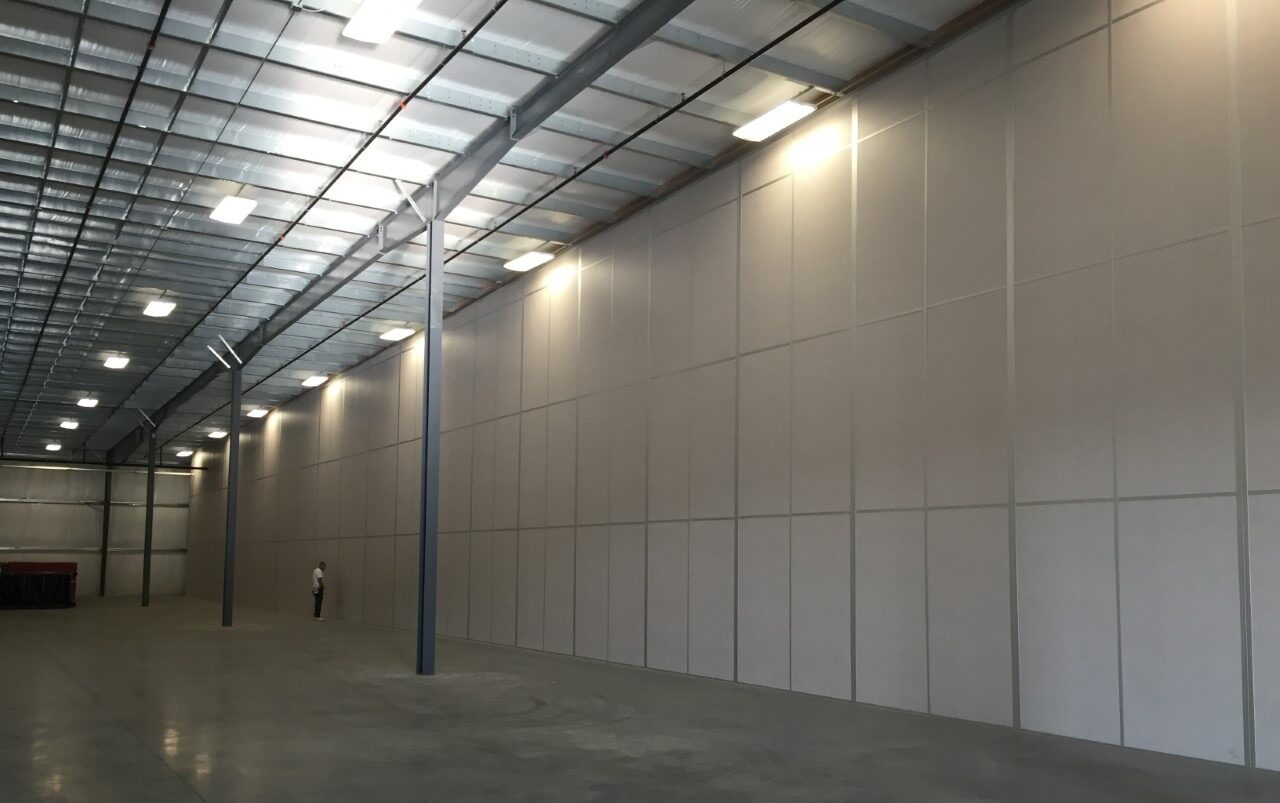
    demising wall divides one tenant’s space from another, or one property from another, within a building. These walls are often found in commercial or multi-tenant structures, such as apartment buildings, shopping malls, warehouses, or office buildings. Their primary purpose is to establish clear boundaries between areas, and they often must meet legal, fire, or soundproofing requirements.

    In a mall, for example, a demising wall might separate one store’s space from another. In an apartment building, it separates individual living units, which give each tenant privacy from their neighbors.

    Because they define more or less permanent separation between spaces, they are long-lasting and not usually moved or changed.

    What is a Partition Wall?

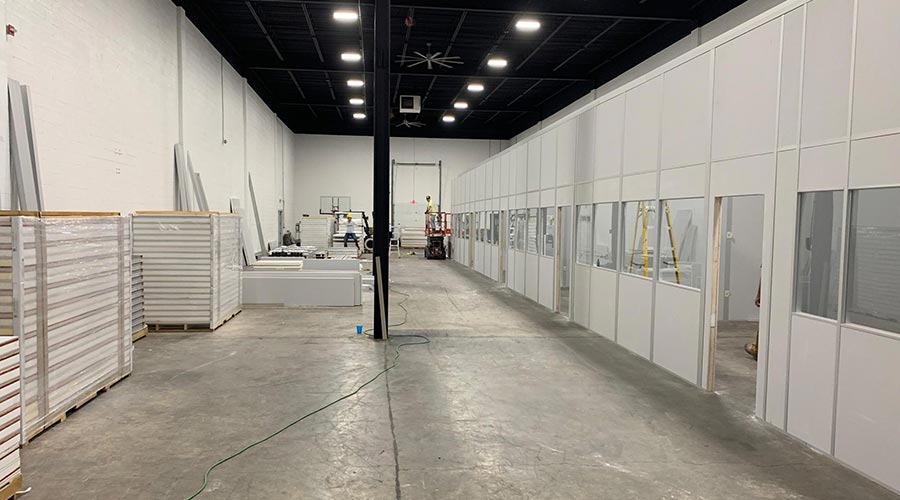
    partition wall, on the other hand, is used to divide spaces within a single unit. They do not divide spaces between tenants, but instead separate spaces within one area or property. They are used to create smaller areas within a larger space, such as separating officesclassrooms, or meeting rooms. As demising walls are more or less permanent, partition walls can generally be changed about more easily, and are the more flexible of the two.

    Partition walls do not generally have the same legal, fire, or soundproofing requirements as demising walls, so they are faster to install. They are a low-cost fix for creating interior spaces that can change with the needs of your business.

    Within a warehouse, for instance, you might want to create a space for administrative staff to work, and so you may decide to create office partitions within the space. If your layout or workflow changes in the future, these buildings can be disassembled and assembled elsewhere in the warehouse. It’s generally this flexibility that people are after when they choose partition walls.

    What’s the Difference Between Demising Walls and Partition Walls?

    While both demising walls and partition walls separate spaces, so to speak, the key differences lie in what their purpose is. As we have mentioned already, demising walls have a more permanent nature than partition walls. Demising walls are mostly for separating tenant spaces, whether in apartment buildings, malls, or office buildings. As a result, they have to follow much more regulations (building codes) related to fire safety, soundproofing, and insulation.

    In contrast, partition walls are used to divide interior spaces within the same unit. They are much more temporary and adaptable, and can be rearranged as needed. Similarly, they typically don’t have to follow nearly as many building codes as demising walls do. However, this also means that they may not give the same level of privacy or safety.

    Cost is another big difference. Since demising walls have more legal/structural requirements, they tend to be pricier. Partition walls, on the other hand, are far more cost-effective, especially since they can be moved around and reused at a later date.

    Demising Walls vs Partition Walls: The Bottom Line

    If you’re looking to divide tenant spaces, then you most likely need demising walls. But if you’re looking to separate your property into other areas for various purposes, then in all likelihood, you need partition walls. Choosing between the two will never specifically be about cost, but always about what they will be used for.

    FAQs About Demising Walls and Partition Walls

    1. What type of wall is more flexible for office spaces? Partition walls are much more flexible; they allow office build outs to be reconfigured as needed.
    2. Can I convert a partition wall into a demising wall later? Technically, yes, but it’s not recommended. Converting a partition wall into a demising wall will likely require significant modifications to meet building codes.
    3. How does a demising wall impact noise control between tenants? Demising walls are built to reduce sound transfer between tenants. They use soundproofing materials, like specialized drywall, to block noise and create privacy between the spaces.

  • The Anatomy of A Sustainable Home: 5 Basic Principles

    The Anatomy of A Sustainable Home: 5 Basic Principles

    Sustainable Home – two big words are being described here, anatomy and sustainability. When we say anatomy, what immediately comes into mind is the overall structure of the body. It gives you a picture of how all the body parts and organ systems are well connected.

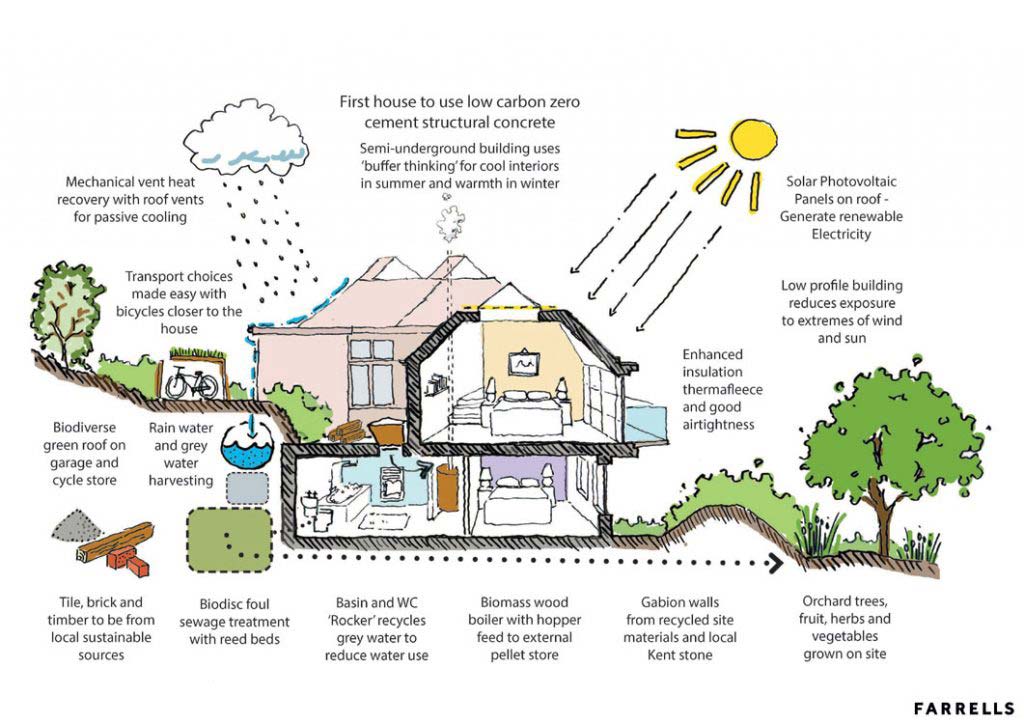
    The construction blueprints and drawings of houses are similarly presenting like of a body’s anatomy where the different living spaces are connected. The second word, sustainable, Cambridge tells us it’s something that can continue over a while. About the environment, being sustainable is to cause little or no damage to the environment, therefore it can continue for a long time. Dissecting deeper into the anatomy of what constitutes a Sustainable home gives us 5 basic design considerations that must be applied.

    Section Sketch of Goudhurst Eco House in Kent Village, England by Farrells Architects

    The Importance of Orientation

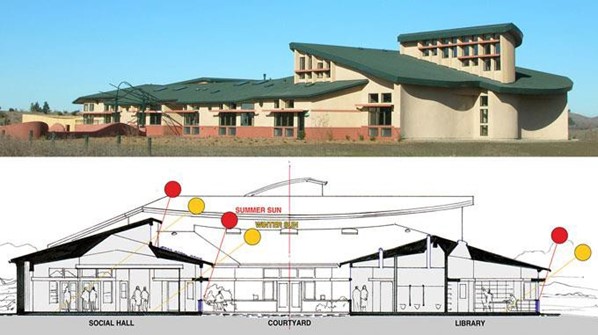
    In humans, life begins with the first heartbeat of the baby inside the mother’s womb. Relating to designing and building any structure and house, the first heartbeat is understanding how to maximize the natural advantages present in your property through proper building orientation. In a gist, orientation refers to the position and direction of sunrise and sunset including the direction of the prevailing winds.  Ideally, for a tropical country like the Philippines, the building’s long side should be facing the north and south axis, while the short side should face the east-west axis. This is to minimize the impact of the undesirable afternoon sun, especially on these days that the earth’s temperature is getting high due to climate change.

    With successful orientation, sustainable design is achieved through passive cooling or having a more stable interior temperature, reduced lighting load due to satisfactory daylight entering the structure, less consumed energy, and less operating costs for both artificial lighting and cooling systems. Also, it helps the designer and builder know what additional efficient building systems can be incorporated to enhance more the sustainability of the design.

    Congregation Beth David Synagogue California, Photo By BuildingGreen.com

    Use The Right Building Materials

    The materials and finishes one uses inside and outside a house are as important as their proper orientation. The building envelope is likely similar to the largest organ of the body which is the skin. Nobody wants to put on products on one’s skin knowing that it’ll just worsen its texture and health. The same goes with choosing the building materials. Having known the location and the right orientation, the question will be, are your material specifications suitable for say, an urban setting? Or will it be feasible for say, a rural setting? Or will it stand the harsh conditions say, being nearby a salty body of water?

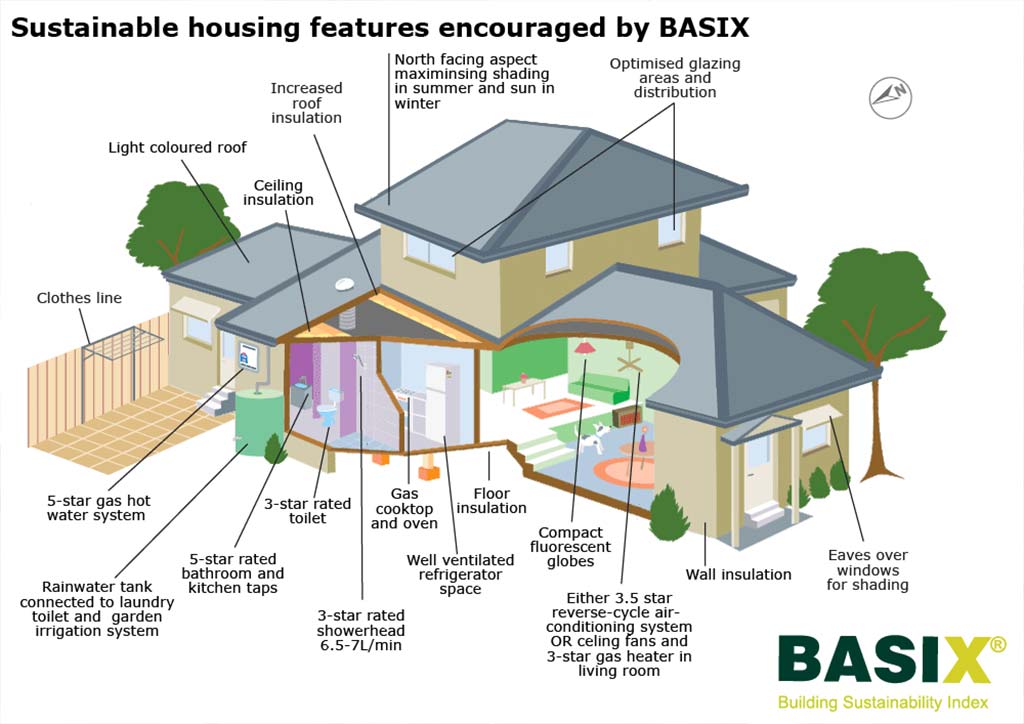
    Today there are so many available products and materials that can be said are truly sustainable. These products are considered sustainable because of the quality itself and how it is produced, using less energy and carbon footprint. Some of the best-known green building material examples would be bamboo, which is considered the best eco-friendly material, pre-cast concrete, recycled plastics, reclaimed or recycled wood, and steel.

    Incorporate Suitable Building Systems and Technology

    As the world advance in years of existence, so is technology. It becomes greater and more intelligent. The most common system adapted is the use of solar panels. Solar Panels allow one to maximize the naturally available solar energy. It is a clean and renewable source of energy. At first, it can be very expensive but in the long run, one will realize that it’s a good investment, having saved not just energy but even that electricity bill. The rainwater harvesting systems and tankless water heaters are also proven sustainable systems. The collected rainwater from roofs temporarily stored in tanks can be used for other purposes, like water closet flushing or for cleaning the garage. While the tankless water heaters reduce the process by heating only the needed amount of water through an electric coil and there’s no need for the typical hot water tank. Last, one of the easiest and most affordable sustainable technology through eco-friendly lighting. It is by using LED or CFL, Compact Fluorescent Lamps, that uses less energy and lasts longer than incandescent bulbs.

    Resort to Smart Furnishings

    How do smart furnishings become sustainable? The first example is the choice of a durable and long-lasting piece of furniture. Again, sustainability is about using things for a long period, so throwing away easy-to-break furniture will be considered wasting resources. Using furniture that’s already made from natural and renewable materials is better preferred. Those pieces with more than one function, or the multi-purpose ones, will be a great option also. It also goes with investing in the right Sustainable Home appliances. Always look for those with energy star labels or eco-friendly labels, for these machines are crafted and well-tested sustainable items.

    Introduce Sustainable Lifestyle for the Users

    It’s an unspoken influence that it’s the architects and designers that somehow create the culture of how people will use their living spaces by the way it is planned and being built. Yes, providing all the above-mentioned elements and systems to create a sustainable house is tremendously essential. But as they say, a house is not a home without users. So is a sustainable house becoming a Sustainable home when users know how to live in a sustainable way. One way is to create an open or free layout of spaces, allowing a space to have multiple uses. It lessens the carbon footprint of getting from one point to another and also helps save resources by only procuring building materials to what is only needed, like fewer doors and partition walls. Also, to give ample outdoor spaces for backyard vegetation for the user’s basic food ingredients and at the same time allowing them to breathe and enjoy outdoor activities like exercise, that is beneficial to their physical and mental well-being as well.

  • Maximize Natural Light in Your Home | Design Tips & Benefits

    Maximize Natural Light in Your Home | Design Tips & Benefits

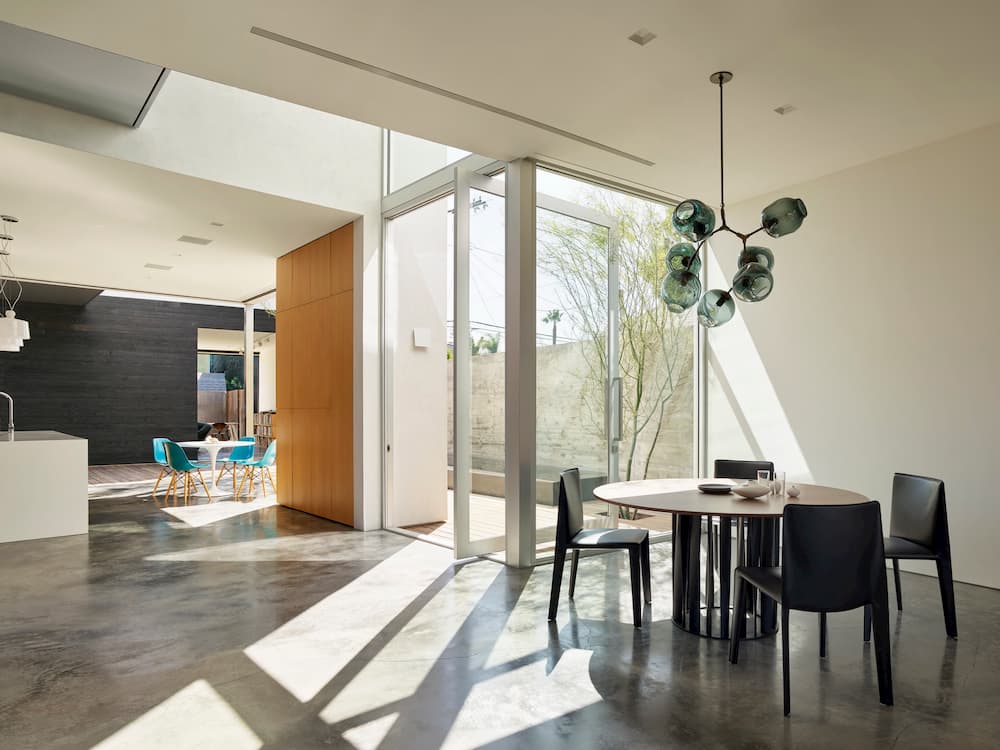
    In today’s lifestyle, where a large majority of time is spent indoors, natural light provides a vital connection to nature. It plays a crucial role in determining the livability and thermal comfort of any home. Read on to learn more about how this resource can be utilised to increase the aesthetic value of your home.

    Benefits of Natural Light in Homes

    Abundant natural light in a home has several psychological, emotional, physical and environmental benefits. These make it a basic necessity and an invaluable asset that needs to be inevitably and strategically planned for. 

    Energy Efficiency

    Increased natural light in the house results in reduced dependency on lighting fixtures in the daytime, leading to lower electricity costs and reduced carbon footprints. Sufficient natural light in colder regions can also aid in creating more comfortable internal temperatures and lower reliance on heating devices. 

    Building Durability and Health

    Exposure to sunlight prevents chemical and physical damages to buildings such as termite infestations and mould, which thrive in the dark and cause allergic reactions and rotting. Dampness can also cause structural damages, which can reduce the building lifespan.

    Natural Light in Interior Design

    The right amount of natural light can make a space seem larger than it actually is, which can be particularly beneficial for small-sized rooms. It can also brighten up spaces, as it makes colours appear more vivid.

    Impact on Mental Health 

    Having ample natural light in the house increases endorphins and serotonin levels, creating a sense of happiness and increasing productivity. It also helps in regulating sleep cycles and increasing energy levels, resulting in overall improvement of mental health. 

    Impact on Physical Health

    Vitamin D is an essential element for human sustenance, for which sunlight is the most important source. With the increase in time spent indoors, it is necessary to have sufficient natural light in enclosed spaces, including homes, in order to avoid deficiency.

    Architectural Design Tips to Ensure Sufficient Natural Light in Homes

    There are several techniques and design principles that can be incorporated to ensure maximum natural light in a home. These can be utilised in the planning stages as general guidelines for home design.  

    Building Orientation and Site Planning

    Building surfaces must be properly oriented to allow maximum natural light while preventing harsh sunlight with harmful UV rays. Therefore, studying sun-path charts or diagrams of specific regions is a crucial element of home design. In India, Western and Southern directions receive harsh sunlight, while Northern light is generally the softest. Thus, larger exposed surfaces must face the North and East, while Southern and Western-facing surfaces can be minimised. In cases where this is not possible, passive shading elements like overhangs and vegetation can be incorporated towards the West and South, which will help in diffusing harsh light.

    Floor Plans

    Open floor plans with minimal interior partitions not only aid in creating visually larger spaces but also allow maximum light penetration between different spaces. In case open floor plans are not preferable, room dividers made of translucent materials or perforations and openings can be utilised. Reducing clutter and unnecessary furniture can help transmission of natural light across different rooms. ‘Vertical open plans’, which include floor slab openings spanning across different floors and topped with skylights, also help in flooding light into multiple levels of a house.

    Room Organisation and Size Ratios for Planning

    Rooms in a home can be organised based on their time and duration of use, in order to permit maximum natural light and have optimal thermal conditions in the house. This also enables controlled degrees of light in different spaces. 

    • Rooms that are used throughout the day, such as living rooms or kitchens, can be placed towards the North, to ensure ambient natural light.
    • Rooms that are mostly used during the night, such as bedrooms can be placed towards the South and West, to avoid excess heat during the day and ensure warm conditions at night. 
    • Balconies and terraces can be oriented to have better views of sunrises and sunsets. They also act as buffer spaces that diffuse harsh rays at these times before transmitting them inside.

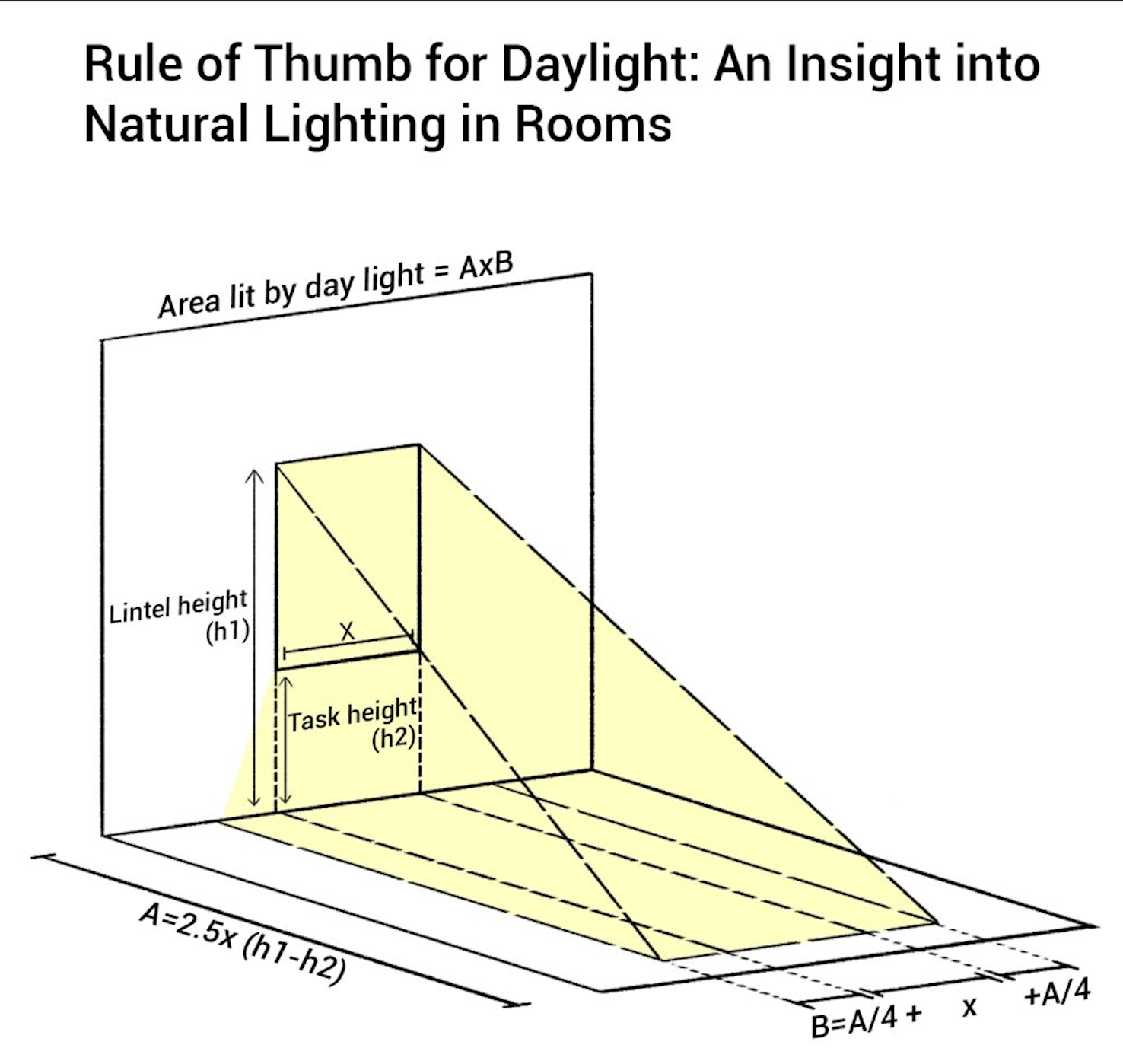
    The size of spaces is another factor to be considered. Walls facing windows must not be placed too deep into a room, so that light can be transmitted uniformly all across. Having very deep rooms with fewer windows can result in dark or gloomy areas. However, the depth must also not be minimised, in order to prevent excess daylight and glare, which can make spaces visually and thermally uncomfortable. 

    The Daylight Thumb Rule can be used to calculate optimum depth. It states that the maximum depth of daylight entering a space is 2.5 times the difference between lintel height (h1) and task or sill height (h2), i.e.,

    Maximum Depth of Daylight = 2.5 (Lintel Height – Task or Sill Height)

                                                             = 2.5 (h1 – h2).

    The Daylight Thumb Rule

    Positioning and Sizing of Windows

    Similar to the building orientation, windows also need to be oriented to ensure optimum natural light. Windows on the Western and Southern sides can be smaller to avoid harsh sunlight, while Northern ones can be comparatively larger to allow soft light. Windows on the East side can be avoided in rooms that are used majorly during the early parts of the day to eliminate harsh early morning sunlight. If these cannot be avoided, they can be substituted with clerestory windows (windows that are above eye level), to allow diffused midday rays. 

    Colour Schemes

    Natural light in interior design also plays a significant role in ensuring thermal comfort of homes. The use of lighter colour tones can help in diffused internal reflection of natural light, resulting in brighter looking spaces, while darker colours absorb light and create dim spaces. Colours of all interior elements—including furniture, fabrics like curtains and carpets, wall paint and flooring materials—have an effect on the luminosity of a room. However, highly reflective elements can cause irritating glares and must be avoided.

    Alternative Strategies for Maximising Natural Light in Homes

    In cities with smaller plots and fewer exposed surfaces, it is often difficult to incorporate large windows to allow natural light. In such cases, it is advisable to include alternative strategies. 

    • Skylights 

    These are openings in the roof slab generally covered with glass and allowing the entry of direct sunlight into a home. This glass can be frosted or incorporate additional screening elements to avoid harsh UV rays. 

    • Reflectors 

    Materials or objects like mirrors and glossy laminates that can be placed in different locations for controlled reflection of the available natural light are termed as reflectors. These can be placed opposite to windows and other openings to double the amount of daylight entering the room.

    • Increase in Area Exposed to the Sun

    Saw-tooth shaped or staggered roofs and walls with glass or other transparent materials increase the surface area that is exposed to the sun, thus bringing in more natural light. 

    • Screens

    Perforated and latticed dividers or screens can be created as a substitute to solid walls for allowing diffused light into a room.

    • Light wells/ Sun Tunnels/ Sun Pipes

    These are roof openings that are similar to skylights but are relatively smaller and have additional reflecting elements lined along a tube or box shape that help transmit the light into specific zones, such as darker spaces like basements and storage rooms. 

    • Light Shelves

    A light shelf is a horizontal element fixed above eye level, close to glass windows. It is made up of reflective materials that reflect light to the ceiling, which then reflects back diffused light into the room.

    Designing For Optimum Lighting Conditions

    While having abundant natural light in a home has several benefits, it may not always be an ideal condition, for example in very hot regions. In these cases, it may be more important to block out excessive and harsh sunlight with passive shading elements and design methodologies. Strategies for use of light diffusers, reflectors and filters need to be incorporated as required in the region, to ensure ideal conditions. 

    Therefore, it is vital to study solar charts for specific regions while designing, in order to optimise the amount of natural light in homes. It is advisable to hire experts who can assure the right lighting conditions for your home. Contact Brick & Bolt to build your dream home with ideal natural lighting today.